Podcast Explorer
Any timePast weekPast monthPast year

36 subjects for “AI agents”

8:02

Prediction: Every Agent Needs a Human

Published May 24, 2026

AI predictions: Job markets, Codex beats Claude, and the death of org charts | Dan Shipper

The guest's first prediction is that the AI job apocalypse is not really a thing, and that every AI agent needs a dedicated human who cares about it. He argues that agents are only useful when a person continuously supplies context and attention, and that companies are starting to see this pattern. The discussion establishes that automation does not eliminate the need for humans but reshapes what humans are responsible for.

2:20

AI Agents in Daily Workflow

Published Aug 19, 2026

From Chrome DevTools to AI Engineering, with Addy Osmani

Addy describes how agents now manage much of his life, e.g., using agents to research other speakers' talks before his AI world fair keynote. He reflects that agents have 'unchained' people with many ideas, and that freed time gets filled with more work because the work is enjoyable.

9:14

Future of Sales Profession and Career Advice

Published Jan 1, 2026

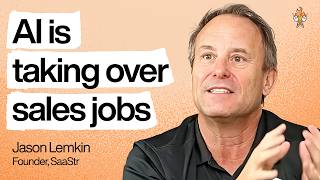
We replaced our sales team with 20 AI agents—here’s what happened next | Jason Lemkin (SaaStr)

Jason predicts AI will eliminate classic SDR and BDR roles focused on emails and lead qualification, making them mostly extinct next year. High-end sales like managing agents could pay $250K annually, while mediocre performers face displacement. Leaders must embrace AI for efficiency; juniors should learn tools to become hyper-employable, and advice includes picking one agent, training it personally, and iterating daily for 30 days.

8:27

Platform, Tools, and Agents

Published Dec 4, 2025

Why AI is disrupting traditional product management | Tomer Cohen (LinkedIn CPO)

The model requires three components: platform (rearchitecting codebase for AI composability), tools/agents (custom-built for research, trust, growth), and culture. Platform investments enable AI reasoning over internal systems, often requiring custom integrations. Tools like trust, growth, research, and analyst agents automate substeps, drawing on LinkedIn-specific data for better outcomes.

6:43

Agent-First Workflows and AI Cleanup

Published Jul 16, 2026

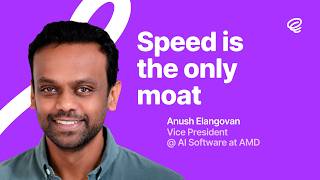
Speed Is the Only Moat 🏎️ — with Anush Elangovan

Anush describes the team as 100% agentic in approach, though individuals are at different adoption curves. He stresses that more than 50% of the work—especially for legacy companies—is non-AI engineering: exposing data, code, and access so AI can operate on them, and eliminating tribal knowledge ("AI cleanup") which also benefits humans.

8:11

Winning with Proactive Agents

Published Dec 14, 2025

Why humans are AI's biggest bottleneck (and what's coming in 2026) | Alexander Embiricos (OpenAI)

Winning requires building proactive super assistants via coding agents that use computers effectively by writing code, enabling broad agency without users knowing it's coding. ChatGPT as ubiquitous interface for general use, Codex for deep coding; evolve to composable code for all agents (e.g., scheduling, analysis). Agents today are 'slop' outside coding but will improve via code composability. Future: Ubiquitous code increases need for human oversight; focus on acceleration, not replacement, by easing review/validation.

2:53

Consumer AI landscape: three areas

Published Sep 6, 2026

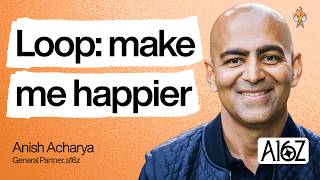
Why companies are becoming a series of loops | Anish Acharya (a16z)

Anish maps consumer AI into three big areas. First, coding agents as a general way to interact with the world — people use Claude Code to edit videos or Codex to build airplane games with their kids — with A16Z investee Wabi, a platform for creating, consuming, and sharing mini apps, as the standout example. Second, personal agents: the developer-tool moment is being distilled into mass-market consumer and enterprise agents. Third, entertainment broadly — creative tools like Suno and fast-growing companionship products, which are uncomfortable to discuss and thus underdiscussed; notably, most companion-product users are women in their 40s and 50s. All three map to human jobs-to-be-done: a channel for ambition, for fulfillment, and something to do with the rest of your time.

7:30

Trustworthy AI agents framework

Published Mar 16, 2026

Design the System, Not the Hero: Building Trust in the AI Era - Andrew Stevens

Andrew explains that people are still mystified by AI and that probabilistic responses erode trust, drawing a line between consumer-grade and enterprise-grade AI. He describes his blog series on trustworthy agentic AI, which grew into a 160-page framework covering prompt injection (likened to SQL injection), zero-trust inputs, allow lists, content boundaries, action confirmations, and verifiable audit logs with deterministic replay. The framework, with example YAML/JSON and API-gateway implementations, is being published to help the industry build auditable, explainable, compliant agentic systems.

12:08

AI's Impact on Software Engineering

Published Feb 12, 2026

The programming language after Kotlin – with the creator of Kotlin

Andrew describes his current AI-assisted workflow (Cursor tab completion, prompting, agents) and argues we're in early days of a new era. He identifies a fundamental flaw in current agent interaction: humans talk to agents in human language but commit machine-language code, losing the intent in chat history. He stresses the growing importance of review and testing, predicting better agent scaffolding, language-server integration, and specialized development environments. He assumes the technological singularity is not happening, so humans remain in charge—meaning engineers will still organize essential complexity, which is what Codespeak is for.

3:19

Advice for Software Developers

Published May 18, 2026

Why Your AI Strategy Is Failing: The AI Paradox of Optimizing Coding Alone - Andrew Haschka

Andrew advises that systems thinking is becoming a core skill—competitive advantage moves to those who can define what systems should do, decompose them, and evaluate results. Prompt engineering evolves into agentic orchestration fluency: giving agents well-structured intent, decomposing problems into agent-executable tasks, and critically evaluating output. He stresses working in small batches with agents, and that if AI writes 90% of the code, the human's key contribution is knowing whether it's safe to ship—acting as director of the flow with security literacy and testing intuition.